
Understanding Pips in Trading A Comprehensive Guide 1569748797

In the world of trading, especially in the foreign exchange market, considerable emphasis is placed on understanding the fundamentals. One such fundamental concept is the ‘pip’. A pip, or ‘percentage in point’, is a critical measurement in forex trading that traders utilize to quantify price movements. It acts as a standardized unit of measurement for price changes, which can affect trading decisions and the overall profitability of a trade. To delve deeper into this subject, you can visit what is a pip in forex trading Trading Connexion.
What is a Pip?
A pip is the smallest price move that a given exchange rate can make based on market convention. In most currency pairs, a pip is traditionally the fourth decimal place, or 0.0001. For example, if the EUR/USD currency pair moves from 1.1050 to 1.1051, it has moved one pip. However, in currency pairs that involve the Japanese yen, a pip is typically the second decimal place, or 0.01. Therefore, if the USD/JPY moves from 110.00 to 110.01, that is also one pip.
Why are Pips Important?
Pips are crucial for several reasons. Firstly, they provide traders a clear and understandable way to assess price movements, regardless of the currency pair being traded. This standardization makes it easier for traders to calculate their profit or loss. For example, if a trader buys 10,000 units of a currency pair and the price increases by 10 pips, the trader’s profit would be 10 pips multiplied by the value of a pip for that specific position size.
How is a Pip Calculated?
The monetary value of a pip varies significantly depending on the size of the trading position (lot size) and the currency being traded. In standard forex trading, the common lot size is 100,000 units. For a standard lot, a pip typically carries a value of $10 for currency pairs priced with four decimal points. Thus, when trading a standard lot in EUR/USD, a movement of one pip would translate to a $10 change in profit or loss.
For mini lots (10,000 units), a pip would have a value of $1, while for micro lots (1,000 units), the pip would be worth $0.10. Therefore, understanding position sizes is key in determining how much you might gain or lose based on pip movements.
Examples of Pip Movement
Let’s examine a few examples to illustrate how pips work in practice.
Example 1: EUR/USD Pair
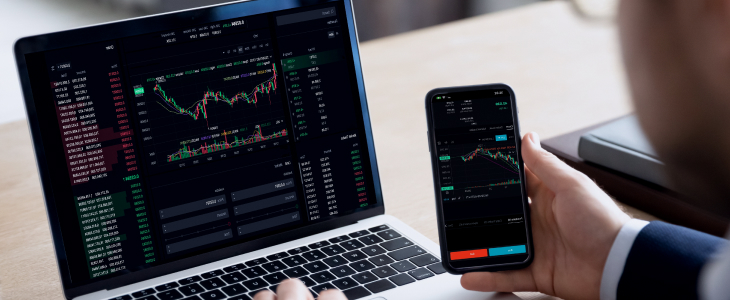
Suppose a trader buys 1 standard lot of EUR/USD at a price of 1.1050. If the price subsequently rises to 1.1070, the price movement is 20 pips (1.1070 – 1.1050). Given that each pip is worth $10 for a standard lot, the potential profit from this trade would be 20 pips x $10/pip = $200.
Example 2: USD/JPY Pair
Now consider a trader buying 1 standard lot of USD/JPY at 110.00. If the price rises to 110.50, this represents a movement of 50 pips (110.50 – 110.00). For USD/JPY, where a pip is worth approximately $10 for a standard lot, the profit would be 50 pips x $10/pip = $500.
Pipettes – A Newer Measurement
With the advancement of technology, brokers have started offering even more precision in the form of pipettes. A pipette is one-tenth of a pip. This means that in pairs where pips are represented to four decimal places, a pipette displays the fifth decimal place. For example, if EUR/USD moves from 1.10500 to 1.10501, it has moved one pipette. This extra decimal point can help traders fine-tune their entries and exits from trades.
Understanding the Role of Pips in Trading Strategy
In trading strategy, the concept of pips is central to risk management and position sizing. Traders often set stop-loss and take-profit orders based on pip levels, which allow them to define their risk in a quantifiable way. For instance, a trader might decide to set a stop-loss order 30 pips below their entry point. This means that if the trade goes against them, they will exit at that predetermined price to limit their losses.
The Psychology of Pips
Understanding pips is not just a mathematical exercise; it also plays a pivotal role in the psychology of trading. Many traders might find comfort in the simplicity of dealing with pips rather than dollar amounts. Visualizing profit and loss in pips can sometimes make it less emotionally charged, allowing traders to adhere to their strategy without panicking over fluctuations in monetary terms.
Conclusion
In conclusion, getting a grasp on what a pip is and how it functions is a fundamental part of forex trading. Pips serve as the building blocks for calculating profits and losses and are integral to developing a coherent trading strategy. They provide traders with a standardized measurement to gauge price movements, facilitate risk management, and help maintain discipline in trading activities. Whether you are a novice trader just beginning your journey or a seasoned professional, understanding the role of pips can significantly influence your trading approach.